About the museum & collection
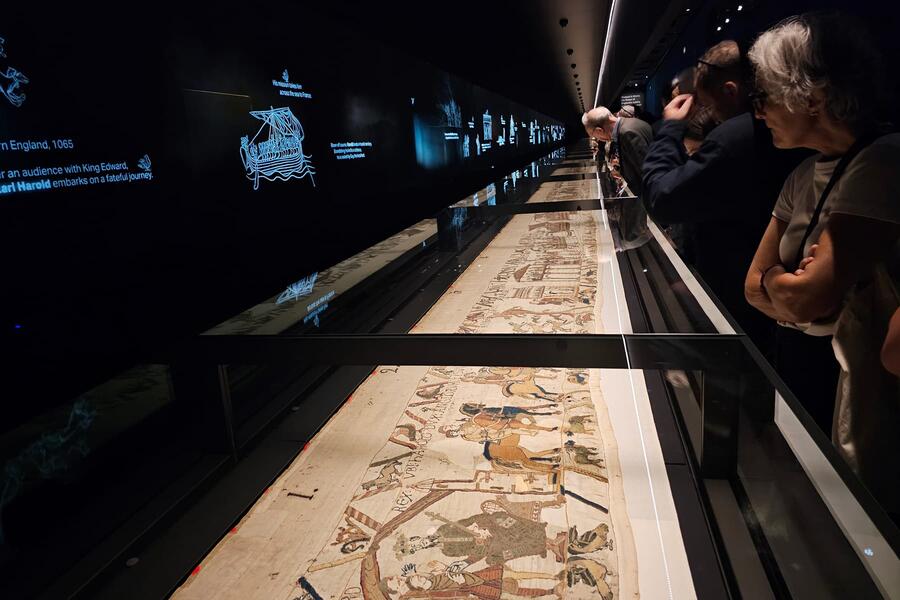
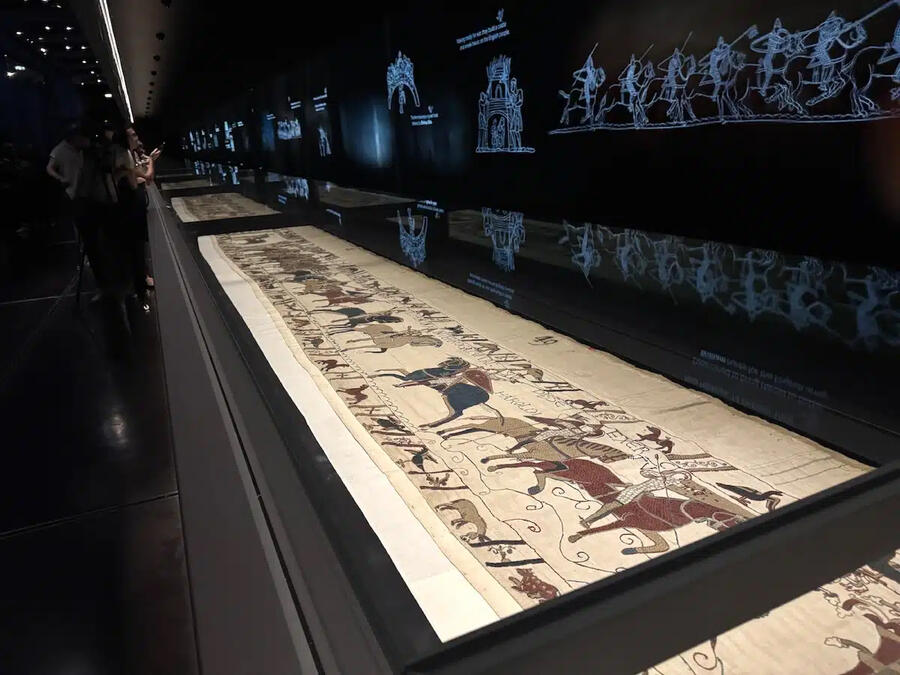
For the first time since it was made nearly 1,000 years ago, the Bayeux Tapestry has returned to England. On loan from France to the British Museum, the 70-metre-long embroidery depicts the events leading up to the Battle of Hastings and the Norman Conquest of England in 1066.
Beyond this famous story, the Tapestry offers an extraordinary view of 11th-century life, from ships, castles and warfare to clothing, food and furniture. Likely commissioned by a Norman patron and made by English embroiderers, it is both an important historical record and a remarkable work of art.
Project challenges & requirements
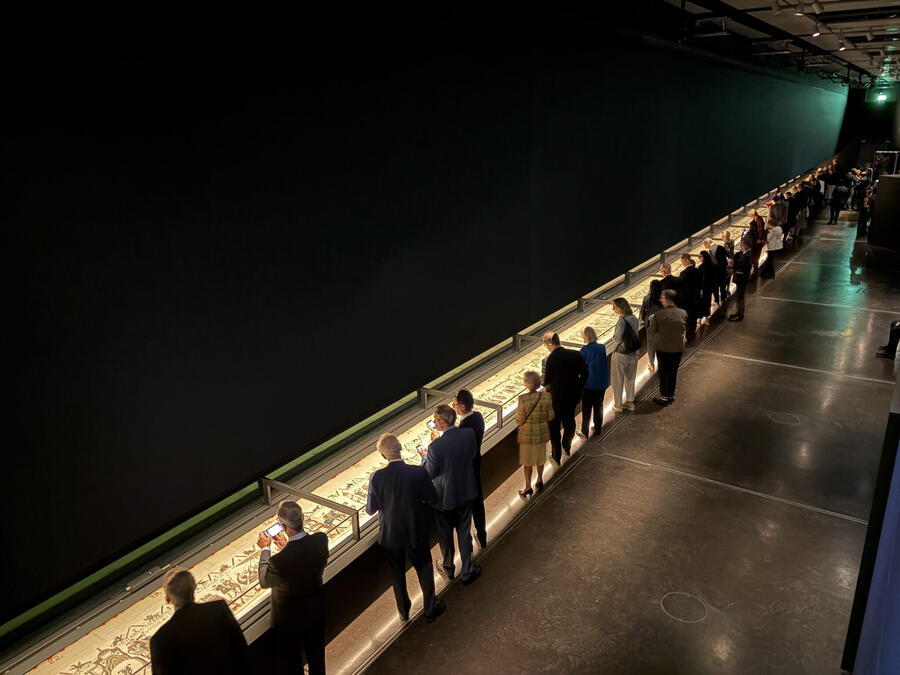
Meyvaert was selected to develop, manufacture and install a bespoke 70-metre table showcase for the exhibition. The project required an unusually close connection between conservation needs, showcase engineering and the method used to position the Tapestry.
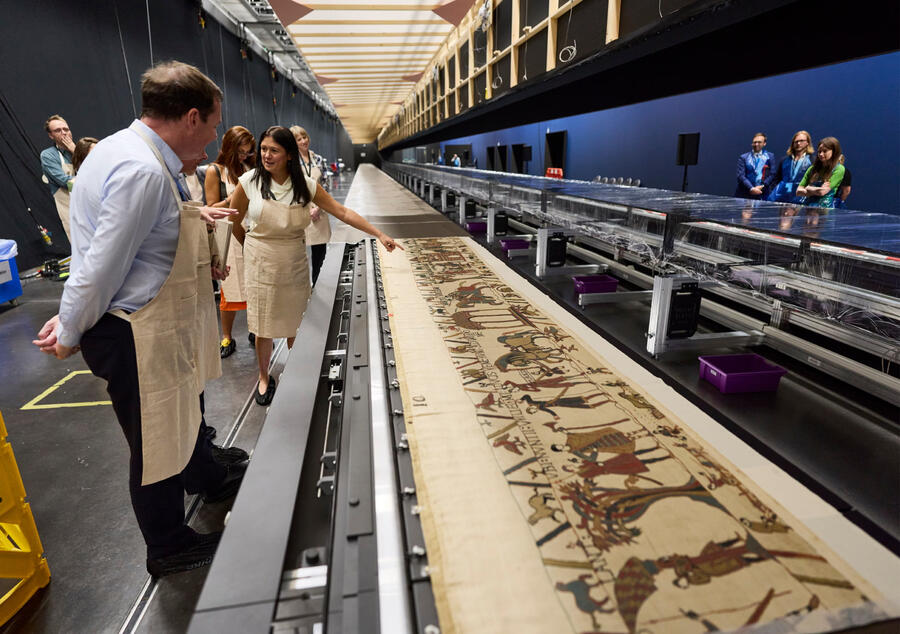
In Bayeux, the Tapestry was displayed vertically. For the British Museum exhibition, it would be presented horizontally. The transition between these two positions became a central part of the showcase design. The movement had to remain controlled while placing as little stress as possible on the object.
The scale added another challenge. The showcase consists of 27 pre-assembled modules, which had to function as one continuous 70-metre structure. Gallery space was limited during the transfer of the Tapestry, making efficient use of the available working area an important part of the design. At the same time, Meyvaert coordinated its installation with the exhibition contractor and British Museum-led security works taking place in parallel.
The completed case also had to achieve the strict airtightness and environmental conditions specified by the museum. All key movements and technical solutions were evaluated with the conservation teams in London and Bayeux.
Display case solutions & results
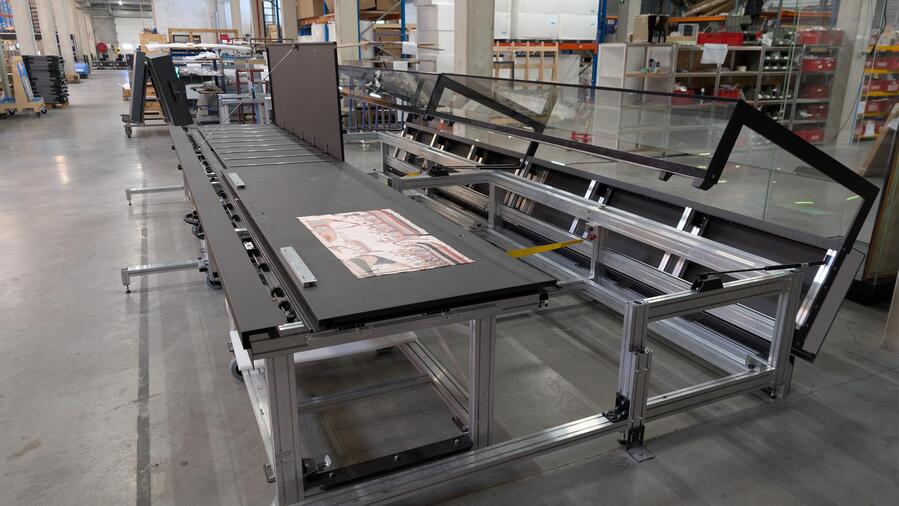
At the heart of Meyvaert’s solution is a movable internal table that supports the Tapestry throughout installation. Its hinged base plates can connect with the suspended textile before it is carefully lowered from vertical to horizontal. The table could be moved forward to create additional working space during this process and, once the Tapestry was positioned, guiding rails and manually operated winches enabled the full 70-metre structure to move into the showcase in a slow and controlled way.
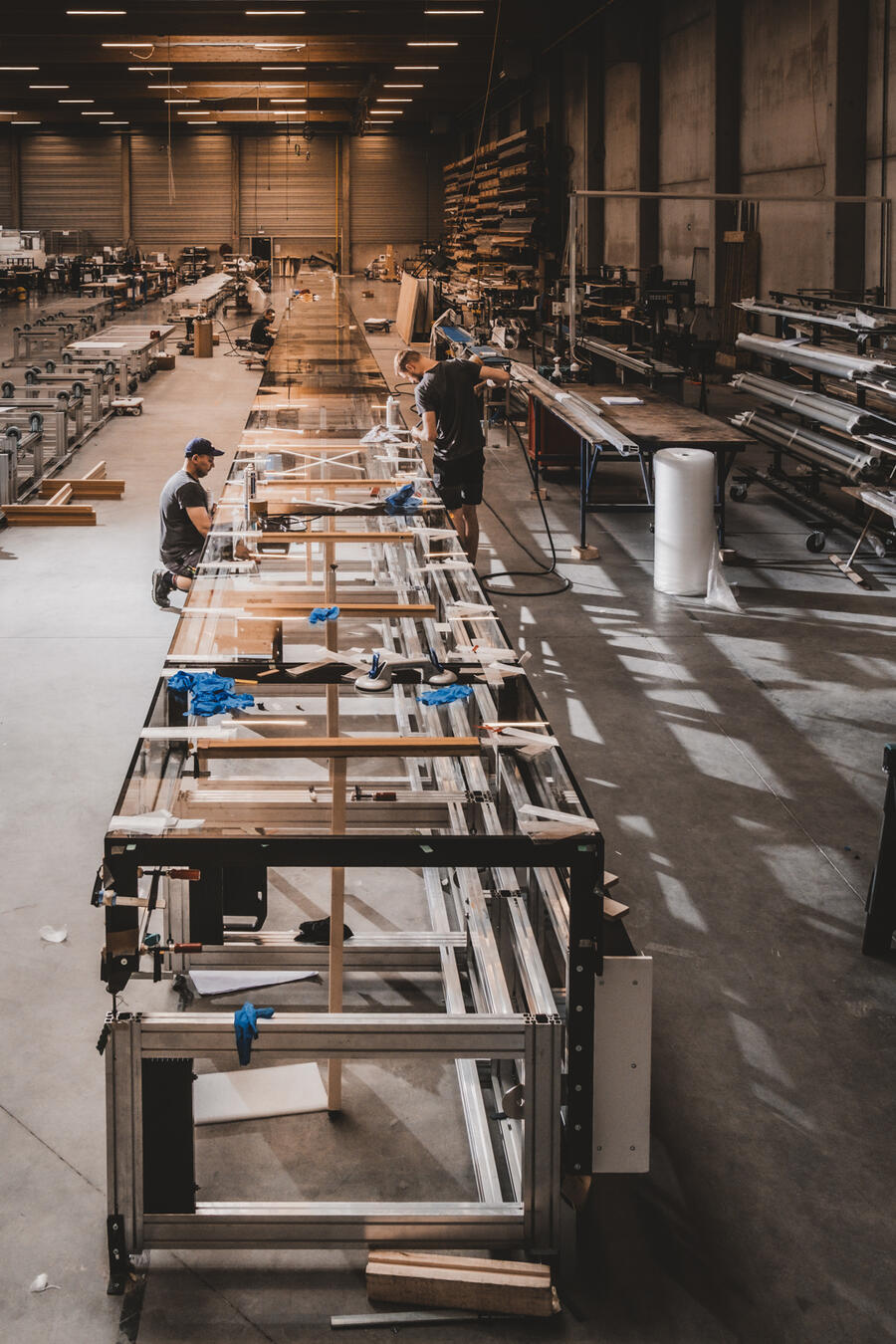
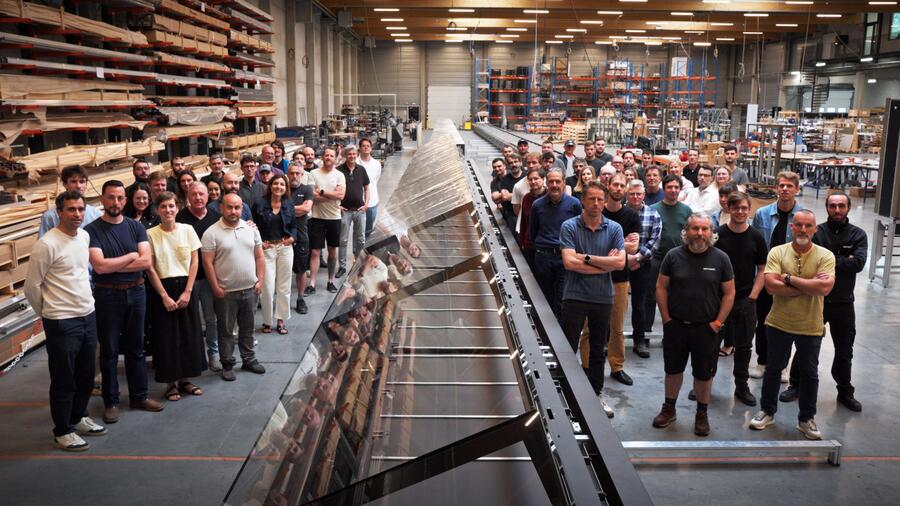
Meyvaert assembled the full 70-metre showcase in its workshop before installation, allowing the team to verify alignment, tolerances and structural performance at full scale. Six climate-control units maintain the required relative humidity, and around 500 silicone dampers beneath the base plates reduce vibrations that could otherwise be transferred to the historic textile.
Developed, prototyped, manufactured and delivered within approximately five months, the project demanded close collaboration and flexibility throughout. The modular construction also creates opportunities for the British Museum to reuse the showcase components for future exhibitions.
Project
The Bayeux Tapestry at the British Museum
Solutions
Country
United Kingdom
Year
2026
Designer
Opera Amsterdam
Exhibit fabricator
Sam Forster
Scope
70-m long table showcase
More info
Photos: The Times | Ian Mansfield | The British Museum | David Levene © The Guardian | Sara Faith © Artlyst | Laura Pye | New York Times